
Professional Website Developer: How to Choose One
Learn how to evaluate a website developer through relevant experience, project planning, testing, communication and ownership arrangements.
Professional Website Developer: What Businesses Should Look For
Choosing someone to build your website affects how the project runs and what you receive afterward. Attractive portfolio images provide useful clues, yet they cannot explain testing, communication or account ownership. A professional website developer should translate your requirements into a working website with clear responsibilities. Businesses in Pakistan can make a better choice by reviewing evidence and asking practical questions before work begins. This guide explains what to prepare, how to evaluate previous work and which deliverables to agree. You’ll also learn how to review progress without needing programming expertise. The goal is a transparent project that produces a usable website and a dependable handover for your own team.
Define What Your Professional Website Developer Must Deliver
Begin with a short description of your business and intended customers. Explain the actions visitors should complete and the information your staff needs afterward. These details provide a useful foundation for discussing scope. A vague request for a modern website leaves too many important decisions undefined.
Describe existing problems when replacing or improving a website. Forms may fail, editing may be difficult or service pages may not reflect your business. Include examples rather than only opinions about appearance. Specific requirements help developers explain their proposed work more accurately.
Review Relevant Work in Context
Look for examples that demonstrate similar requirements, not simply a similar industry. A developer who built a clear product catalogue may have relevant experience for several types of suppliers. Ask which parts they implemented and whether the displayed website has changed since delivery.
Explore live pages where available and review important journeys. Open menus, examine forms and check mobile layouts. A polished homepage does not reveal the quality of every page. Ask how the developer handled content updates, customer enquiries and the client’s administrative needs.
Assess Communication Before the Project Starts
Early conversations can reveal how the working relationship may develop. Does the developer clarify unclear requirements or immediately promise everything? Do explanations connect technical decisions with practical consequences? Clear communication helps you understand the work without requiring detailed programming knowledge.
Agree who will provide updates and how feedback should be collected. A regular review process can prevent contradictory requests from different staff members. Establish one decision-maker when appropriate and give the developer a clear route for resolving questions that affect progress.
Ask About Testing and Quality Checks
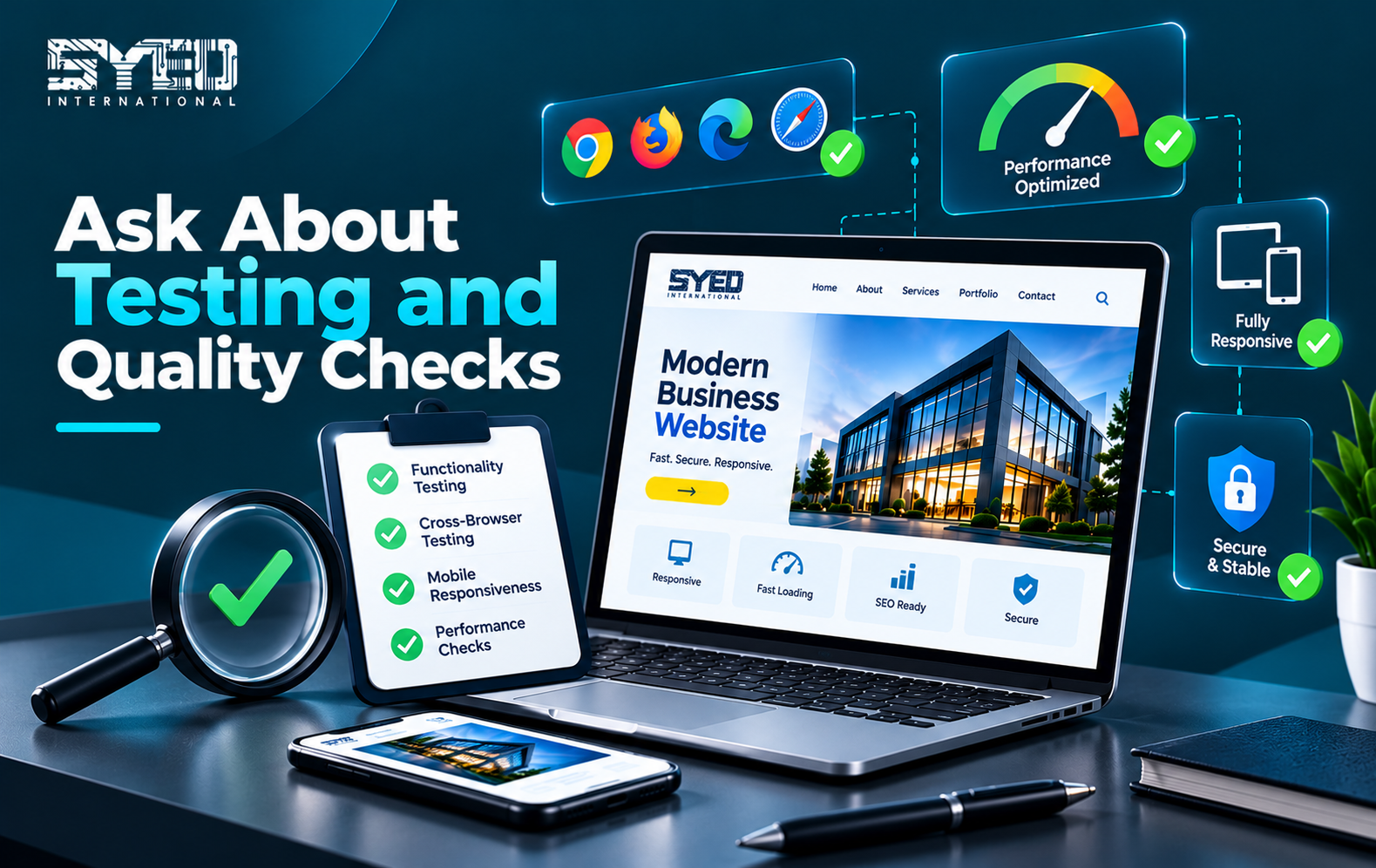
A professional website developer should explain how the finished website will be reviewed. Testing needs to include important functions and relevant browsers, not only visual approval. Ask which pages and tasks will be checked and how problems will be documented before launch.
MDN’s introduction to cross-browser testing describes why websites need testing across their intended environments. Your business can participate through realistic tasks. For example, submit an enquiry, update content and check the result on a phone.
| Review area | Evidence to request |
|---|---|
| Relevant experience | Examples of comparable functionality |
| Scope | Written description of included deliverables |
| Progress | Demonstrations at agreed milestones |
| Testing | A record of important checks and corrections |
| Ownership | Clear access and account arrangements |
| Handover | Instructions and staff training appropriate to the site |
Understand the Proposed Technology
You do not need to choose a framework simply because it sounds advanced. Ask why the proposed platform suits your content, features and available support. The explanation should cover routine editing, hosting requirements and the skills needed for future maintenance.
Review the alternatives when the reasoning remains unclear. A simple service website and a complex customer portal need different capabilities. Syed International’s website development services provide a starting point for discussing these requirements in relation to your business goals.
Clarify Ownership and Access
Agree who controls the domain, hosting and connected service accounts. Clarify access to the website’s administrative tools and any project files covered by your agreement. Your team should understand what it receives at handover and what remains dependent on external services or licences.
Avoid leaving critical ownership questions until the final day. Account recovery details and renewal responsibilities deserve attention early. A clear arrangement makes future support easier and reduces confusion if your business changes staff, providers or the direction of the website.
Agree How Changes Will Be Managed
Requirements can evolve as the website becomes easier to visualise. The project needs a practical way to review those changes without losing track of the original scope. Ask how additional requests will be documented and how they may affect delivery arrangements.
Distinguish a correction from a new feature. A contact form that fails its agreed purpose needs fixing, while a new customer portal changes the scope. A shared understanding helps both sides review requests fairly and keeps project conversations focused on specific outcomes.
Plan the Handover and Support
A useful handover includes more than login details. Staff should understand routine editing, backup responsibilities and how to request assistance. Ask for demonstrations of the tasks your team will perform most often. Record important instructions in a format that remains available after training.
Review the provider’s support scope before launch. Some assistance may cover defects while other work belongs to ongoing maintenance. The guide to choosing a website development company offers further questions about responsibilities and business ownership.
Frequently Asked Questions
What does a professional website developer do?
The role involves implementing a website that meets agreed requirements and operates as intended. Responsibilities may include planning, development, integrations and testing. Design, content writing and ongoing maintenance may be included or handled separately, so the actual scope should always be confirmed.
Should I choose someone based only on their portfolio?
No. A portfolio provides evidence of previous work, but it does not fully explain communication, ownership or support. Review relevant functionality and ask about the developer’s contribution. Combine those findings with a clear proposal and an understandable delivery process.
Do I need technical knowledge to manage the project?
You need a clear understanding of your business requirements and expected outcomes. The developer should explain technical choices in practical terms. Review progress through real tasks and ask questions when a proposed feature or dependency remains unclear.
What happens if I need another developer later?
A documented handover can make that transition easier. Important accounts, project files and operational instructions should be available according to your agreement. External dependencies and licensing arrangements also need documentation so the next provider understands how the website operates.
Choose Evidence and Clear Responsibilities
A professional website developer should help your business understand what will be built and how it will be maintained. Evaluate relevant work, review the proposed process and agree ownership early. These decisions provide a stronger foundation than choosing from appearance or promises alone.
When you contact Syed International, share your requirements and existing website challenges. Include examples of the tasks customers and staff need to complete. That creates a useful basis for discussing scope, implementation and an appropriate handover.