

Business Website Development for Pakistani Companies
Plan a business website that explains your services, handles enquiries and remains manageable as your company grows.
Business Website Development: Building a Useful Online Presence
A business website should help the right customers understand your offer and reach your team. That requires more than placing company information beside a contact button. Business website development connects your services, customer questions and operational needs within one practical online experience. For a Pakistani business, the right structure might support local enquiries, nationwide sales or international buyers. Each goal changes what the website needs to explain and deliver. This guide explores page planning, enquiry handling, useful features and ongoing management. You’ll learn how to define clear requirements before development begins. The result should be a website your customers can use comfortably and your staff can manage confidently every day.
Set Business Website Development Goals
Choose a primary outcome before discussing page styles or technical features. A consulting company might need suitable appointment requests. A manufacturer may want detailed enquiries from trade buyers. These goals require different information and different forms, even when both websites use similar layouts.
Give the project a practical success measure. For example, you could review completed enquiries and whether they contain enough information for a useful response. Avoid relying entirely on visitor numbers. More traffic does not automatically mean the website attracts suitable customers or supports your business effectively.
Understand the Customer’s Decision
Speak with the people who answer customer questions every day. Sales staff may hear repeated concerns about service coverage, delivery arrangements or project requirements. Those questions reveal information your website should explain clearly. Use actual customer language where it accurately describes your services.
Next, consider what someone needs before contacting you. They may want examples of previous work, a description of your process or confirmation that you serve their area. Build these answers into relevant pages. This reduces the need for customers to search through unrelated information.
Create a Clear Page Structure
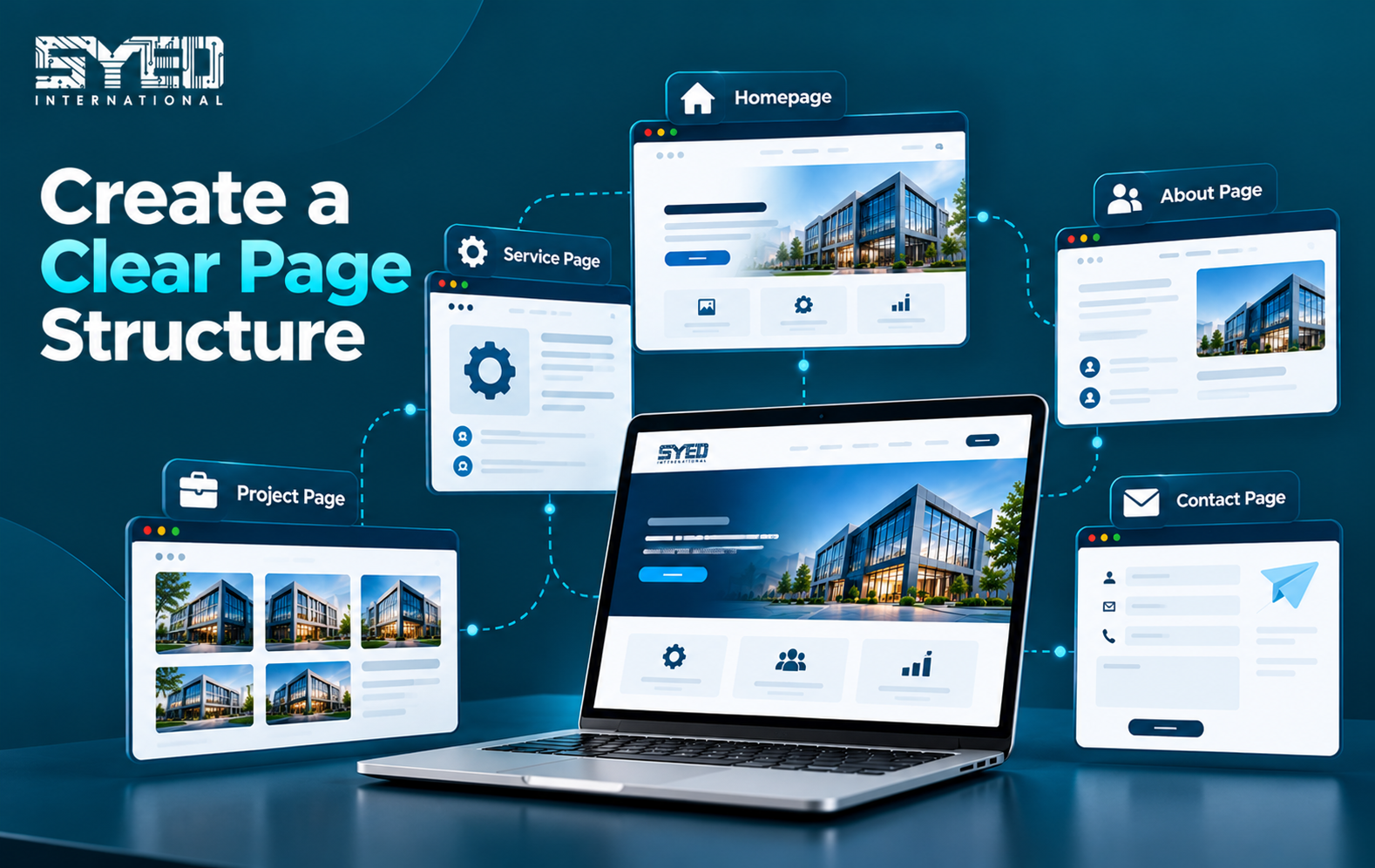
Begin with a manageable set of pages that reflects your business. The homepage introduces the offer while service pages explain distinct solutions. Company information provides context and a contact page gives visitors a clear response route. Add further pages when they serve a genuine purpose.
Syed International’s website development planning guide explores these preparation decisions in more detail. Use the page plan to identify missing content before development starts. A structure filled with temporary text makes design approval harder and can delay a useful launch.
| Page | Main purpose |
|---|---|
| Homepage | Explain the business and direct visitors to relevant information |
| Service page | Describe a specific offer and its intended customers |
| About page | Provide accurate company background and context |
| Project page | Demonstrate relevant work with permission and clear detail |
| Contact page | Help visitors send an appropriate enquiry |
Explain Services With Useful Detail
A service page should answer more than what the service is called. Explain the problem it addresses, who it suits and what the process involves. Mention the information customers should prepare. This gives visitors a clearer basis for deciding whether to contact your team.
Keep each page focused on its own subject. Google’s SEO Starter Guide recommends helpful content and a logical site structure. Descriptive titles and relevant links support that foundation. Treat search optimisation as part of clear communication, rather than a reason to repeat phrases unnaturally.
Connect Enquiries With Daily Operations
Business website development should include the process that follows a submitted form. Decide which team receives the request and what information they need. A general inbox may work initially, while different departments might later need separate enquiry routes and responsibilities.
Test notifications and customer confirmations before launch. Staff should understand how to identify incomplete requests and follow up appropriately. If you connect a customer management system, confirm that data arrives correctly. A working form is valuable only when the business can handle what it collects.
Select Features That Match the Workload
Choose functionality according to the tasks your customers actually perform. A product catalogue may need filtering and specification downloads. A service company might benefit more from an organised enquiry form. Adding an online checkout is unnecessary when your business relies on individually reviewed quotations.
Discuss these requirements through website design and development services before choosing a platform. Ask how staff will update the content and whether the proposed features introduce additional dependencies. The best starting point is a useful workflow that your team can operate consistently.
Review Content Ownership and Editing
Your business should control the information it publishes. Confirm who supplies descriptions, images and company details during development. Establish an approval process for important claims and project examples. Accurate content matters more than filling every available section with promotional language.
Also review the editing experience before launch. Ask a staff member to replace an image, update a service paragraph and publish a basic announcement. These small tasks reveal whether the system fits everyday needs. Document any restrictions so your team understands what requires technical assistance.
Build a Routine for Improvement
The first version gives you a starting point for learning. Review common customer questions and identify where visitors appear to need more information. A missing service explanation may deserve attention before another animation or promotional banner. Make changes according to observed needs.
Keep technical care and content maintenance connected. Updated service details can become ineffective if forms stop working or links break. Agree who checks the website and who handles issues. A simple review routine helps the site remain relevant as your business changes.
Frequently Asked Questions
What does business website development include?
The scope can include planning, page structure, design, content setup, functionality, testing and launch. However, every proposal differs. Ask for a written description of included work and clarify responsibilities for content, account access, training and ongoing maintenance before the project begins.
Does every business need an online store?
No. Some businesses sell through consultation, quotation requests or direct sales conversations. In those cases, clear service pages and useful enquiry forms may be more appropriate. Choose a sales process that fits how your customers make decisions and how your team fulfils requests.
How many pages should a company website have?
The number should follow the information customers need. Separate services may justify distinct pages when their content is genuinely different. A smaller business can begin with fewer pages. Avoid creating pages merely to reach an arbitrary total or repeat similar information.
Can the website support customers across Pakistan?
Yes, the content and enquiry process can explain genuine nationwide service coverage. Make availability clear and distinguish remote services from location-dependent work. Do not imply a physical office in every city unless those offices actually exist and the details are accurate.
Build Around the Customer Journey
Business website development becomes more effective when the project connects customer needs with internal responsibilities. Clear pages attract interest, useful forms collect relevant information and organised follow-up keeps the conversation moving. These elements need to work together throughout the customer journey.
Prepare your service descriptions and common customer questions before you contact Syed International. Include the actions you want visitors to complete. A practical brief helps the development discussion focus on the website your business needs rather than unnecessary features.